









Comparison of Cold Storage Insulation Materials: Water-repellent Advantages of Glass Wool Pipes vs. Durability of Rock Wool Pipes – Which to Choose for Anti-Condensation?
2026-04-29
With the rapid development of global cold chain logistics and the food and pharmaceutical industries in 2026, cold storage insulation technology has become one of the key energy saving areas. According to industry reports, the consumption of energy by cold storage facilities makes up more than 60% of the total cold chain energy consumption. Improper selection and construction of the insulation system will cause 20-40% extra workload for the refrigeration system, resulting in high electricity consumption and increased carbon emission. As the exporter specialized in glass wool and rock wool products, United Insulation (www.unitedinsulation.com) offers you detailed analysis and comparisons of glass wool pipe and rock wool pipe based on overseas engineering experience and related standards (GB/T 17738-2022 "Glass Wool Products", GB/T 11835-2016 "Rock Wool, Slag Wool and Their Products", GB 50264 "Cold Storage Design Code"). In this article, we will analyze the water repellency effect, anti-condensation effect, thermal conductivity, calculation of thickness, as well as construction precautions for cold storage pipe insulation and wall insulation. Through this article, I hope that we could help you choose the proper materials for your cold storage insulation project in order to achieve both energy-saving and carbon-reduction effect.
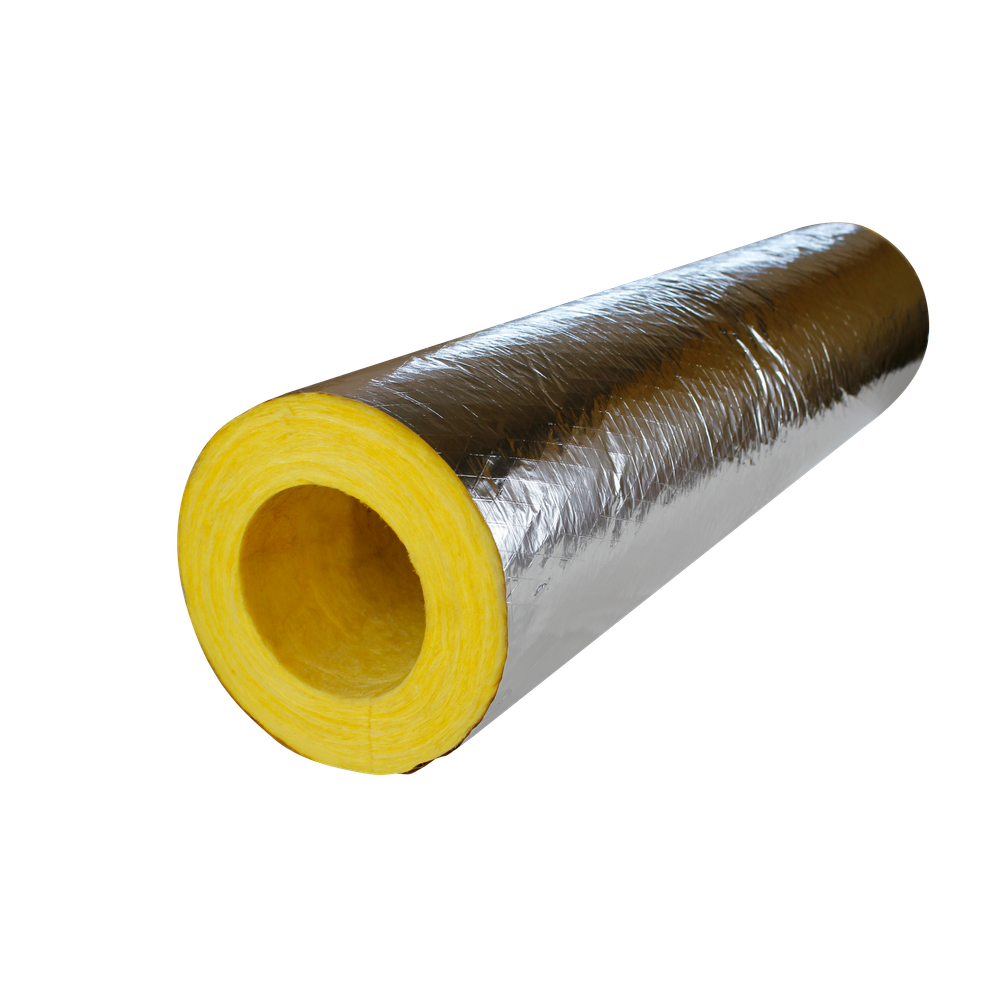
I. Overview of Glass Wool Pipes and Rock Wool Pipes
Glass Wool Pipes: Glass wool is made of raw material, including quartz sand and borax. The material is heated and fiberized to form long, soft and highly porous fibers. The glass wool pipes manufactured and exported by United Insulation usually come with a density ranging from 40 to 100 kg/m³, a very low thermal conductivity ranging between 0.034 and 0.042 W/(m·K), high water-repellency (≥98%) and low water absorption (≤1%). These characteristics make the glass wool pipes especially suitable for anti-condensation cold storages.
Rock Wool Pipe Section: This type of pipe consists mainly of natural basalt. The material is heated and centrifuged into strong and rigid fibers. Having a density of 80-150 kg/m³, acidity coefficient ≥1.6, durability and A1 fire rating, rock wool pipe sections are suitable insulation materials for large scale cold storages.
In both cases, the pipes belong to the category of inorganic fiber eco-friendly insulation materials that are free of formaldehyde, emit a low amount of VOCs, comply with REACH standards and greatly minimize energy use and CO2 emissions in cold storage usage.
II. Performance Comparison of Pipes (Data is taken from GB/T 10295-2021, ASTM standard, and industry reports 2025-2026)
The following table summarizes the latest real-world parameters (average temperature -20℃ to 0℃, based on national standards and international testing):
The thermal conductivity is crucial in the construction of cold storage insulation materials. The glass wool pipe material performs excellently in low temperature conditions because of its minimal thermal conductivity capacity, hence reducing thermal bridges within the same thickness. Water repellent: Glass wool pipes contain very minimal moisture content. This together with the presence of the aluminum foil coating on the exterior prevents any condensation within cold storage, avoiding frosting that may affect insulation efficiency.
Durability and fire resistance: Rock wool pipes contain great density and stability properties, which allow them to last longer even when used in the walls/roofing systems of big cold storages; A1 fire classification ensures safety.
| Performance Indicator | Glass Wool Pipe (United Insulation Typical Value) | Rock Wool Pipe (United Insulation Typical Value) | ComparisonConclusion (2026 Cold Storage Selection Reference) |
| Thermal Conductivity W/(m·K) | 0.032-0.040 (Excellent grade ≤0.035) | 0.035-0.045 (Excellent grade ≤0.040) | Glass wool pipe offers better cold preservation performance |
| Maximum Service Temperature | -100℃ to 450℃ | -100℃ to 750℃ | Both suitable for cold storage; rock wool also handles high temperature |
| Fire Rating (GB 8624) | Class A (non-combustible) | Class A1 (highest non-combustible) | Rock wool pipe has superior fire protection |
| Hydrophobic Rate / Water Absorption Rate | ≥98% / ≤1% | ≥98% / ≤3-5% | Glass wool pipe has significant anti-condensation advantage |
| Density Range kg/m³ | 40-100 | 80-150 | Glass wool pipe is lighter, resulting in lower transportation carbon emissions |
| Compressive Strength kPa | 30-70 | 80-150 | Rock wool pipe has better deformation resistance |
| Environmental Indicators (LCA) | Low production carbon footprint, high recycling rate | Contains 70% recycled slag, durability over 50 years | Both are excellent; glass wool pipe achieves faster initial carbon reduction |
| Heat Loss Reduction Rate | 80-90% (cold storage scenarios) | 75-85% | High-quality insulation overall saves more than 80% energy |
III. Deep Connection with Environmental and Ecological Protection: How Cold Storage Insulation and Cooling Contributes to "Dual Carbon" Goals
Cold storage refrigeration is one of the most significant causes of carbon emissions in the cold chain industry. According to the industry research analysis done between 2025-2026, energy efficiency improvement in cold storage through insulation optimization reduces the energy required for refrigerating by 20-30%, where some instances of carbon reduction can be up to 19.95% per annum (tons of CO₂ saved per storage facility). Life cycle assessment (LCA):
- Glass wool pipes: Extremely hydrophobic nature, eliminating condensation problems and decreasing defrosting energy cost (defrosting consumes up to 10-20% of the overall energy use of cold storage). Example scenario: Insulating medium-sized cold storages with 80 mm glass wool pipes can decrease heat loss in one year by around 35%, which is equal to 40-80kg of carbon dioxide emissions reductions per meter of the pipe annually.
- Rock wool pipes: Extensively long-life period (over 50 years), leading to reduced waste and greenhouse gas emission caused by regular replacement. Cold chain logistics facilities implementing excellent insulation technology will be able to get energy savings of 25-40% on a whole scale with considerable annual carbon reduction, thus satisfying the "dual-carbon" policy of China and international green cold chain standards.
In addition, cold chain insulation is capable of reducing the risk of refrigerant leakage (a kind of indirect greenhouse gas) and minimizing the use of fossil fuels due to the lower level of electricity consumption. Products provided by United Insulation are environmentally-friendly according to ISO 14001 certification standards and are used as reliable sources of insulation for foreign countries' exports.
IV. Application Scenarios for Cold Storage Insulation in 2026
1. Cold Storage Piping Insulation (-20℃ to 0℃): Prefer glass wool pipes because of their excellent water resistance and non-condensing property, thickness ranging from 80-120mm for ammonia/Freon system cold storage piping insulation.
2. Cold Storage Wall/Roof Insulation: For rock wool pipes/boards with high density and great stability, the thickness can be 100-150mm for large-scale cold storage buildings and wall insulation.
3. Cold Storage in Humid and Warm Regions: Glass wool pipes have excellent water resistance, along with moisture protection layers that solve the condensation problem of the cold storage.
4. Cold Storage of Higher Quality Standards for Food/Pharmaceutical Products: Both need low VOC design due to indoor air environment considerations; rock wool pipes have better fire-resistance property according to GB 50264 requirements.
5. Projects Seeking for Cold Chain Certification for the Environment: Considering economic thickness calculation results, glass wool pipes should be preferred for maximizing energy-saving and emission reduction effects of cold storage.
V. Frequently Asked Questions (FAQ)
FAQ1: Which is more environmentally friendly for cold storage insulation: glass wool pipe or rock wool pipe?
Both are green and environmentally friendly insulation materials. Glass wool pipe has a low carbon footprint, is lightweight, and produces less emissions during transportation. Its strong water repellency reduces defrosting energy consumption. Rock wool pipe is durable, has high recyclability (more slag), and offers higher energy-saving and carbon-reduction benefits throughout its entire lifecycle. Choosing the right material based on temperature and humidity requirements can significantly reduce the carbon footprint of cold storage.
FAQ2: What is the most crucial material advantage for preventing condensation in cold storage?
Glass wool pipe has a water absorption rate of ≤1% and a water repellency rate of ≥98%, providing significant anti-condensation effects and preventing frost accumulation that increases energy consumption and safety hazards. Rock wool pipe also achieves 98% water repellency, but glass wool pipe performs better in low-temperature and humid environments. United Insulation recommends using it in conjunction with an aluminum foil surface layer.
FAQ3: How to calculate the insulation thickness for cold storage to maximize energy saving and carbon reduction?
According to GB/T 8174 and cold storage design specifications (considering storage temperature and ambient temperature), 80-120mm thick insulation is recommended for cold storage at -18℃, and 120-150mm thick for temperatures below -25℃. Due to its low thermal conductivity, the thickness of glass wool pipes can be appropriately reduced while still achieving the same thermal resistance. Increasing the thickness by 20mm can save an additional 10-15% in energy, resulting in significant annual carbon reduction. United Insulation provides free cold storage pipe thickness calculation support.
FAQ4: What are the precautions for cold storage pipe insulation construction?
Glass wool pipes are soft and easy to cut; pay attention to sealing joints and ensuring the integrity of the moisture barrier. Rock wool pipes require anchors to prevent settlement. Wear protective equipment during construction; low-slag ball design reduces dust. Strictly follow cold storage construction precautions to ensure long-term cold storage insulation performance.
FAQ5: How to achieve the ecological protection benefits of cold storage through insulation?
High-quality cold storage insulation reduces refrigeration energy consumption by 20-30%, reducing electricity consumption and carbon emissions. Glass wool pipes prevent condensation, reducing defrosting frequency; rock wool pipes extend maintenance cycles due to their durability. United Insulation's exported products come with LCA reports, helping projects obtain green cold chain certification.
Conclusion:
Glass wool pipes are outstanding in water repulsion, anti-condensation, and easy cold storage insulation; rock wool pipes are outstanding in toughness and excellent fire resistance. By 2026, choosing appropriate insulation materials for cold storage based on scientific principles is no longer just an issue of cost savings; it is also a matter of responsibility in the transformation towards green ecology within the cold chain industry.
United Insulation (www.unitedinsulation.com) provides export-grade glass wool and rock wool pipes with stable parameters and complete certifications, serving cold storage insulation projects in the Middle East, Southeast Asia, Europe, and other regions. Contact us for the latest 2026 product samples, technical parameters, LCA reports, and free material selection consultation to jointly promote the low-carbon development of the cold chain!
Related Blog
Can mold grow in ROCKWOOL insulation?
United Insulation Successfully Exports High-Performance Glass Wool Blanket/Rolls to Argentina, Deepening its Core South American Market Footprint
Can I add glasswool on the ceiling to avoid heat in the room?
United Insulation Successfully Exports High-Performance Glass Wool Rolls Compliant with Mexican NOM Standards, Deepening its Core Market Footprint in North America and Latin America
What is the biggest problem with fiberglass insulation?
Can mold grow in ROCKWOOL insulation?
United Insulation Successfully Exports High-Performance Glass Wool Blanket/Rolls to Argentina, Deepening its Core South American Market Footprint
Can I add glasswool on the ceiling to avoid heat in the room?
United Insulation Successfully Exports High-Performance Glass Wool Rolls Compliant with Mexican NOM Standards, Deepening its Core Market Footprint in North America and Latin America
What is the biggest problem with fiberglass insulation?
contact us